








Mild gastrointestinal (GI) discomfort is one of the most common concerns during infancy. Symptoms such as excessive crying, bloating, flatulence, regurgitation, and constipation are frequently reported during the first months of life.
A population-based prospective study found that 74% of infants in the Middle East experience gastrointestinal symptoms, whether they are breastfed or formula-fed. Therefore, nutritional interventions that support digestive comfort may play an important role in infant well-being.
When breastfeeding is not possible, choosing an infant formula that supports digestive comfort becomes an important consideration. Clinical studies suggest that goat milk-based infant formula may help reduce mild gastrointestinal symptoms while supporting healthy growth and development.
Clinical Study: Goat Milk Formula Improves Gastrointestinal Symptoms
A randomized controlled pilot study evaluated the effect of a goat milk-based formula (GMF) on mild gastrointestinal symptoms in formula-fed infants aged 1–3 months. After 14 days, the median CoMiSS® was significantly lower in the GMF group compared with the CMFp group:
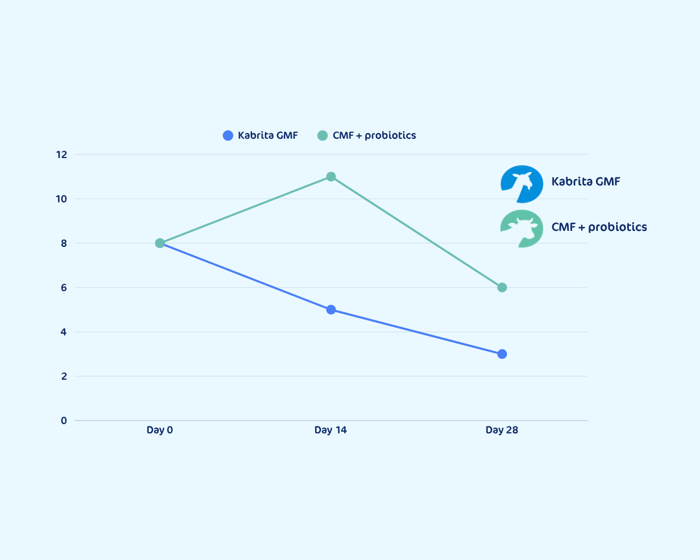
Parents in the GMF group also reported improvements in stress levels and quality of life, whereas no similar improvement was observed in the CMFp group.

Randomized Controlled Study: Faster Improvement in Gastrointestinal Comfort
GI symptoms are common during infancy, and goat milk-based infant formula may offer improved digestive comfort.
This multinational study evaluated the prevalence of GI symptoms and assessed the impact of introducing goat milk-based formula.
Parents and legal guardians from Brazil, Mexico, Russia, and the Netherlands completed questionnaires regarding their infant's GI symptoms before and after introducing goat milk-based formula.
Symptoms were assessed using the Cow's Milk-related Symptom Score (CoMiSS®), together with questions regarding crying, gassiness, eczema, respiratory symptoms, and stool consistency.
Among infants consuming goat milk formula:
- 89% had a CoMiSS® score ≤6, indicating a low burden of GI symptoms.
- 87% experienced less gassiness.
- 87% had reduced crying.
- 84% showed improvement in constipation.
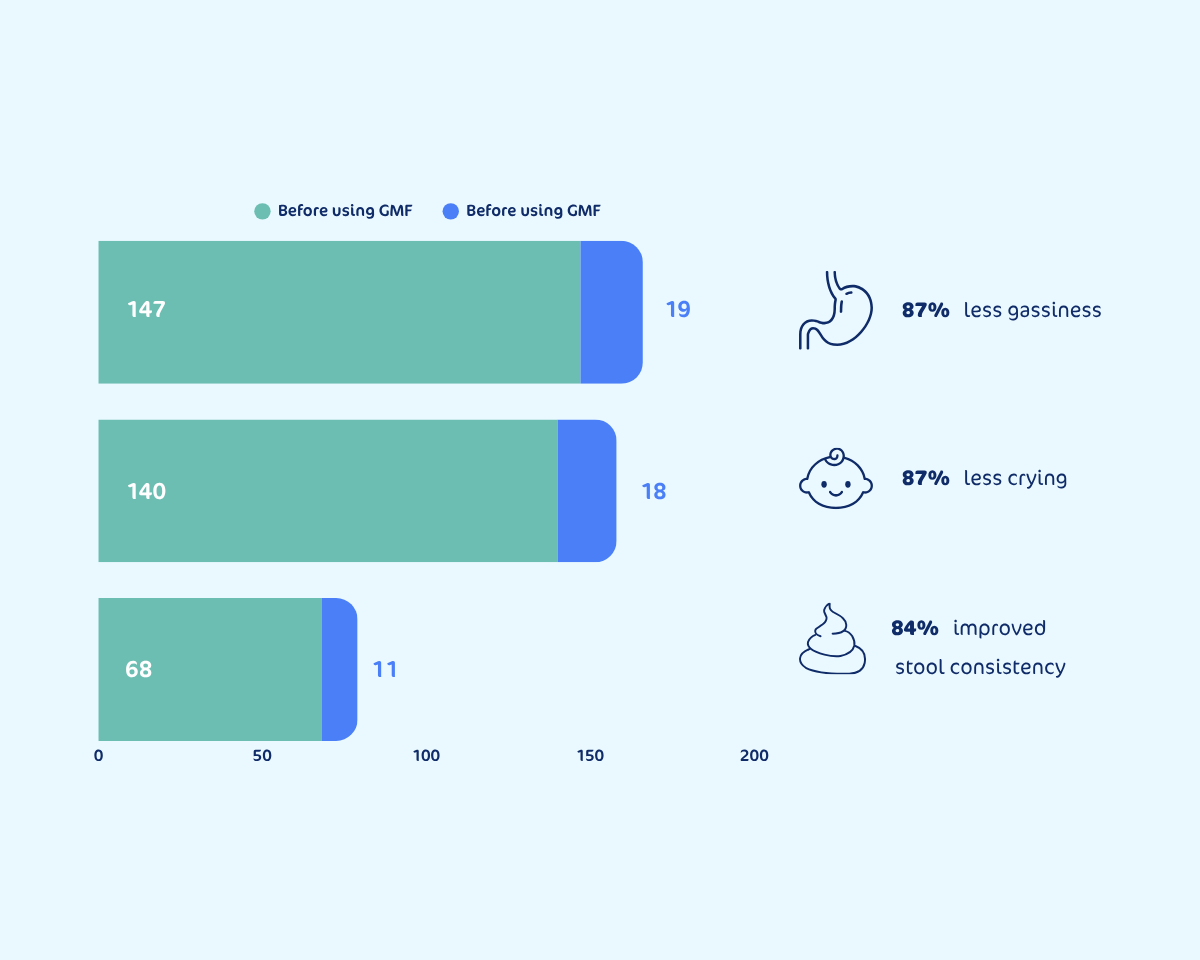
Parents reported a lower prevalence of gastrointestinal symptoms following the introduction of goat milk-based formula.

Sleep Duration Among Breastfed, Goat Milk-Based Formula-Fed, and Cow's Milk-Based Formula-Fed Infants
Improved digestive comfort may also positively influence infant sleep. A post-hoc analysis of a double-blind randomized controlled trial compared sleep outcomes among infants fed:
- Goat milk-based formula (GMF), Cow's milk-based formula (CMF), and Human milk (HM). The study included 304 healthy term infants. Formula-fed infants were randomly assigned to receive either GMF or CMF for 112 days, while a breastfed group served as the human milk reference.
Infants fed goat milk-based formula experienced significantly longer daytime sleep and showed sleep patterns more closely resembling those of breastfed infants. These findings suggest that improved digestive comfort may contribute to better sleep quality.


Why Kabrita® Supports Digestive Comfort
Goat Milk Fat
Kabrita® contains goat milk fat in addition to goat milk proteins to further enhance digestibility. Studies suggest that goat milk fat may support fat digestion and metabolism due to its naturally smaller fat globules, which are structurally closer to those found in human milk than cow's milk.
Naturally Lower αs1-Casein
Goat milk naturally contains lower levels of αs1-casein, resulting in softer curd formation during gastric digestion, which may contribute to improved digestive comfort.
Predominantly A2 β-Casein
Goat milk naturally contains predominantly A2 β-casein, the same type of β-casein found in human milk.
Lactose as the Sole Carbohydrate Source
Like human milk, Kabrita® uses lactose as its only carbohydrate source, providing a nutritional profile that closely resembles breast milk.
Goat Milk Oligosaccharides and GOS
Kabrita® contains naturally occurring goat milk oligosaccharides together with added galacto-oligosaccharides (GOS) to help support the development of a healthy intestinal microbiota.
Conclusion
Digestive discomfort remains one of the most common concerns during infancy. Clinical evidence suggests that goat milk-based infant formula may provide faster improvement in mild gastrointestinal symptoms, better stool consistency, and improved parental quality of life while supporting healthy growth.
The unique nutritional composition of Kabrita®, including naturally lower αs1-casein, predominantly A2 β-casein, goat milk fat, lactose as the sole carbohydrate source, and naturally occurring oligosaccharides with added GOS, may contribute to improved digestive tolerance in formula-fed infants.
For healthcare professionals managing infants with mild functional GI symptoms, Kabrita® offers a nutritionally complete goat milk-based formula that supports digestive comfort while promoting normal growth and development.
Is goat milk formula easier to digest than cow milk?
Clinical studies suggest that goat milk-based infant formula may improve digestive comfort due to its unique protein and fat composition.
Does goat milk formula help with constipation?
Some studies have reported improvements in stool consistency and reduced constipation among infants fed goat milk-based formula.
What makes Kabrita different?
Kabrita combines naturally A2 goat milk proteins, goat milk fat, lactose as the only carbohydrate source, and naturally occurring goat milk oligosaccharides.