







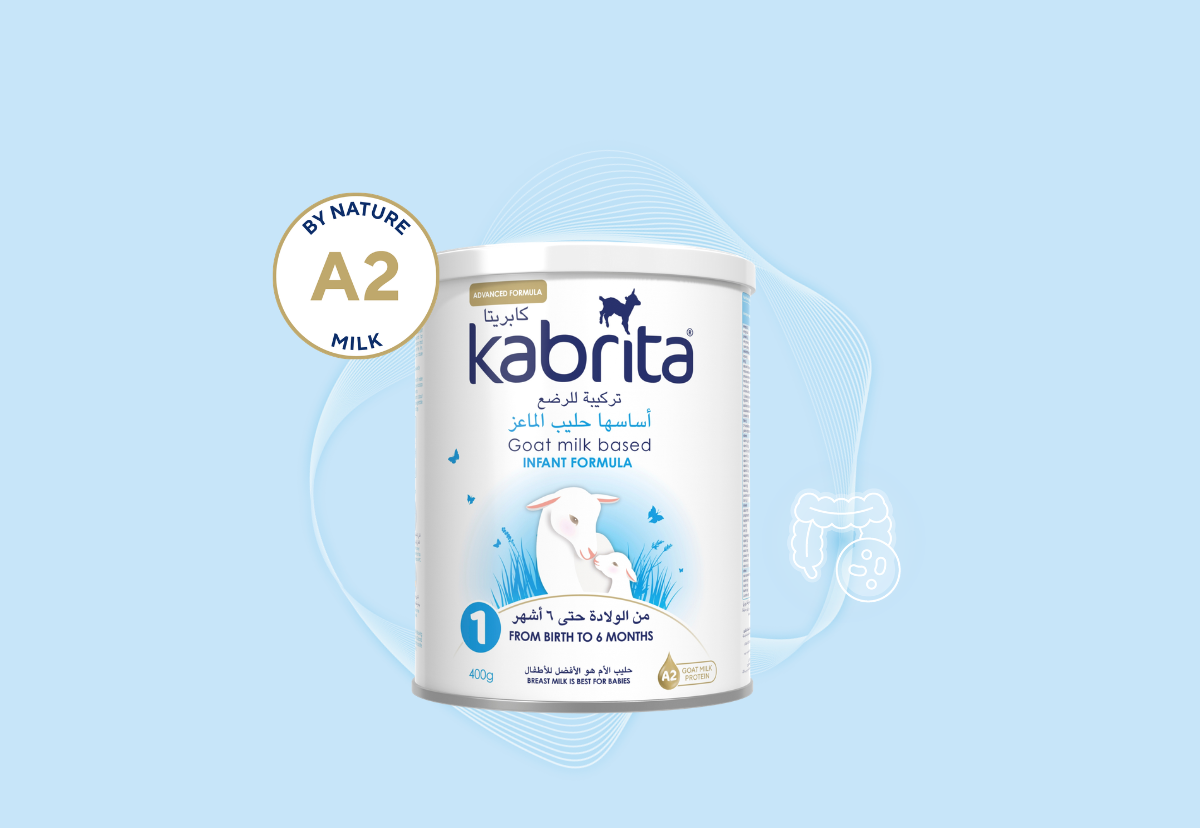
Protein composition plays a central role in milk digestibility. Casein accounts for approximately 80% of total milk protein. Beta-casein is one of the main proteins in milk and is mainly present in two types: A1 and A2.
Understanding the structural protein differences between A1 and A2 beta-casein can help healthcare professionals make evidence-based recommendations for infant and pediatric nutrition.
Watch this video to understand the difference between A2 and A1 Milk
Understanding Beta-Casein Protein Variants in Mammalian Milk
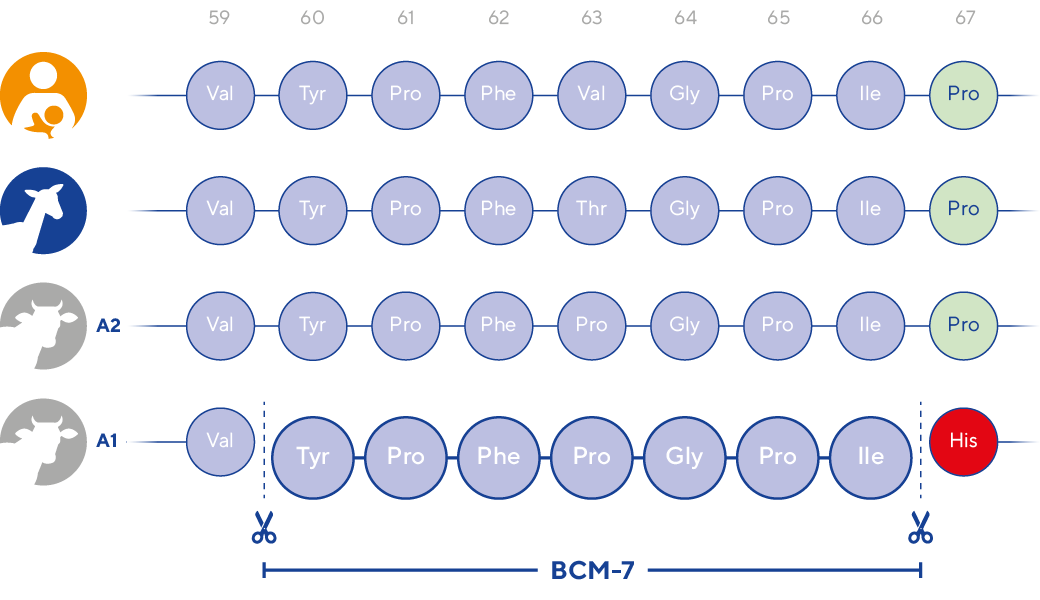
Mammalian milk contains two primary beta-casein variants: A1 and A2. Breast milk naturally contains A2 β-casein, and goat milk contains A2 β-casein as well. Cow’s milk, however, typically consists of a mixture of both A1 and A2 beta-casein proteins.
But, what is the difference between A1 and A2 β-casein?
The Amino Acid Difference That Defines A1 and A2 Milk
The distinction between A1 and A2 β-casein results from a single amino acid substitution at position 67 of the 209–amino acid protein chain. In A2 β-casein, proline occupies this position, whereas A1 β-casein contains histidine.
Although this difference appears minor at the molecular level, the substitution has meaningful implications for protein digestion and subsequent physiological effects.
During digestion, the presence of histidine at position 67 in A1 β-casein makes the protein more susceptible to enzymatic cleavage by digestive proteases. This cleavage releases a bioactive seven–amino acid peptide known as beta-casomorphin-7 (BCM-7).
In contrast, the proline residue in A2 β-casein creates structural rigidity in the peptide bond, making it more resistant to enzymatic cleavage and resulting in minimal to no BCM-7 release during normal digestion.
Physiological Effects of Beta-Casomorphin-7 (BCM-7)
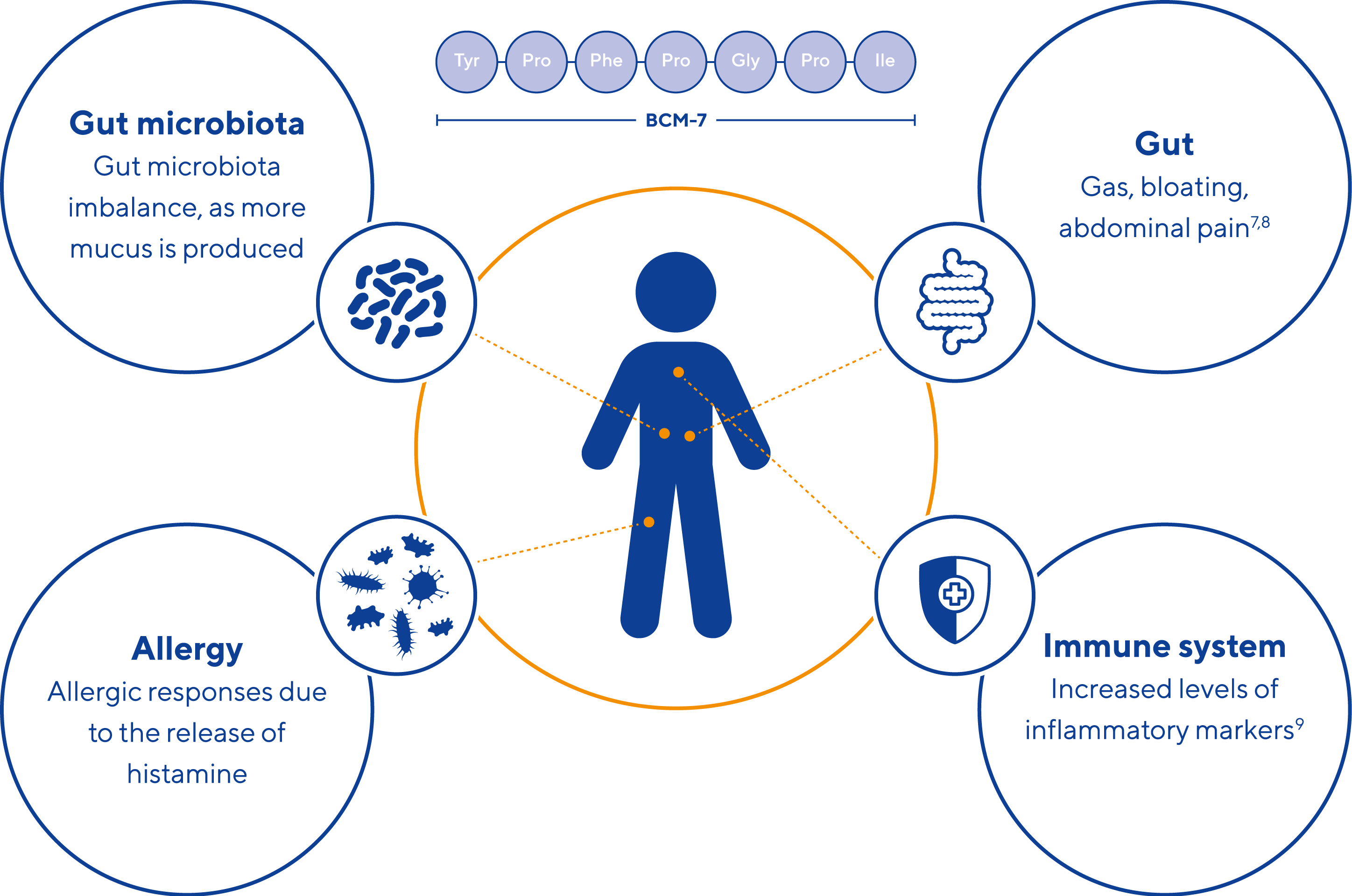
Research suggests that beta-casomorphin-7 (BCM-7) may influence gastrointestinal motility, mucus production, and inflammatory responses in susceptible individuals.
In some infants, this has been associated with symptoms such as:
-
Gas, bloating, and abdominal pain.
-
It may also cause gut microbiota imbalance due to increased mucus production
-
Increased levels of inflammatory markers
-
Allergic responses due to the release of histamine.
Some studies have further explored potential associations between BCM-7 exposure and elevated inflammatory markers in susceptible individuals.
For healthcare professionals counseling parents about formula selection, understanding this biochemical pathway provides a scientific framework for explaining why some infants may experience different digestive responses to various milk-based formulas.
Infant Formula Selection
When parents present concerns about feeding tolerance, such as excessive fussiness, gassiness, or irregular stool patterns, the protein composition of the current formula should be evaluated. While these symptoms may have multiple causes, protein digestibility remains a modifiable factor.
Protein composition plays a central role in infant digestive tolerance. Goat milk naturally contains A2 beta-casein and forms a softer curd in the stomach compared to conventional cow milk. This structure more closely resembles human breast milk and may support easier digestion.
Conclusion
A1 and A2 beta-casein differ by a single amino acid substitution, yet this structural variation influences proteolytic cleavage and BCM-7 release during digestion.
Because breast milk contains exclusively A2 beta-casein, selecting a formula with a predominantly A2 protein profile may more closely align with human milk structure.
Kabrita goat milk–based formulas are naturally rich in A2 beta-casein and designed to provide a protein structure closer to human milk. Combined with softer curd formation and a complete nutrient profile, this may support improved digestive comfort in infants who do not tolerate standard cow milk formulas well.